
If you’ve ever driven through the Antelope Valley, you know it’s a desert. But the fact that communities thrive here—complete with homes, businesses, and agriculture—is thanks to one critical resource: water.
What most people don’t realize is how long and hard this region has fought to secure it. The history of water development in Antelope Valley, California, is a tale of innovation, collaboration, and survival in the face of scarcity.
Let’s go back in time and see how this arid landscape was transformed with the help of strategic planning, state partnerships, and a relentless pursuit of water security.
Beginnings
In the early 1900s, the Antelope Valley was a sparsely populated desert, primarily used for dryland farming and livestock. Groundwater was the only reliable water source, and it was accessed through shallow wells. Back then, the valley’s population was low, so there wasn’t much pressure on the aquifer.
But as more people moved in, the demand for water grew. Farmers began digging deeper wells to irrigate crops like alfalfa and fruit trees. This marked the start of a long-term dependence on groundwater.
Overdraft

By the mid-20th century, water use had outpaced natural recharge rates. Groundwater levels began to drop rapidly—a problem known as overdraft. This led to wells drying up and land subsidence, where the ground literally sank because of water being removed from underground.
The signs were clear: the Antelope Valley needed another source of water to survive and grow.
State Water Project
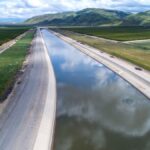
The real game changer came in the 1960s with the California State Water Project (SWP). This massive system of dams, canals, and pumping stations was designed to transport water from Northern California to the drier southern parts of the state.

Antelope Valley water agencies quickly signed up as contractors to receive this imported water. This marked a major turning point—imported water would now supplement local groundwater supplies.
The Antelope Valley-East Kern Water Agency (AVEK) became one of the key players, securing rights to SWP water and building infrastructure to deliver it across the valley. Without the SWP, the population boom in the Antelope Valley during the ’70s and ’80s would have been nearly impossible.
Infrastructure
Once contracts were signed, the next challenge was moving the water. AVEK and other local agencies developed miles of pipelines, pumping stations, and treatment plants.
Here’s a look at key infrastructure milestones:
| Year | Project/Event | Impact |
|---|---|---|
| 1962 | AVEK joins State Water Project | Secured long-term water supply |
| 1972 | First SWP water delivered to AV | Reduced reliance on groundwater |
| 1980s | Major pipeline expansions | Reached more remote parts of the valley |
| 2000s | Storage and recharge projects begin | Saved excess water for dry years |
These projects didn’t just deliver water—they provided the foundation for regional growth.
Agencies
As the region grew, water management became more complex. Several local water agencies formed to serve specific areas. The Antelope Valley State Water Contractors Association (AVSWCA) was created to help these agencies work together.
Some of the key agencies include:
- AVEK (Antelope Valley-East Kern Water Agency)
- Palmdale Water District
- Littlerock Creek Irrigation District
- Quartz Hill Water District
Each agency manages water for its own customers, but through collaboration, they can pool resources, build shared infrastructure, and coordinate planning efforts.
Groundwater Management
Even with imported water, groundwater still plays a major role in the valley. Over the years, efforts to better manage this resource have intensified.
In 2014, California passed the Sustainable Groundwater Management Act (SGMA), requiring overdrafted basins to develop sustainability plans. The Antelope Valley Groundwater Basin is one of these critically overdrafted areas.
Local agencies came together to form the Antelope Valley Groundwater Sustainability Agency (AV GSA), which now oversees how groundwater is used and monitored. This shift marks a new era—where the focus is not just on supply, but long-term balance.
Conservation
Another big piece of the puzzle is conservation. As droughts became more frequent and severe, agencies started pushing for smarter water use.
Programs were launched to:
- Promote drought-tolerant landscaping
- Offer rebates for water-efficient appliances
- Educate residents on saving water
- Encourage leak detection and repair
Today, conservation isn’t just a suggestion—it’s part of the culture in Antelope Valley. Saving water is seen as both a necessity and a responsibility.
Challenges
Despite all the progress, challenges remain. Climate change is altering rainfall and snowpack patterns, making the SWP less predictable. Groundwater overdraft still needs attention, and infrastructure requires constant investment.
Population growth and urban development continue to stretch resources. But the region has proven time and again that it can adapt, plan ahead, and work together.
Timeline of Water Development in Antelope Valley
| Time Period | Major Event |
|---|---|
| Early 1900s | Reliance on shallow wells and groundwater only |
| 1940s–1950s | Overdraft and subsidence become visible |
| 1960s | AVEK joins State Water Project |
| 1970s–1980s | Infrastructure and water imports expand |
| 2000s | Recharge and conservation efforts begin |
| 2010s–2020s | SGMA and long-term groundwater plans launched |
What started as a few farms tapping local wells has evolved into a massive, coordinated effort involving state partnerships, imported water, and sustainable practices.
The history of water development in Antelope Valley is still being written—but it’s already a story of resilience and smart planning in one of California’s most water-challenged regions.
FAQs
When did Antelope Valley get SWP water?
The first State Water Project deliveries began in the early 1970s.
Why was groundwater overdrafted?
Water use outpaced natural recharge, leading to falling water levels.
What is AVEK’s role?
AVEK delivers imported water from the State Water Project.
What does SGMA require?
It mandates sustainable groundwater management in overdrafted basins.
Who manages water in Antelope Valley?
Multiple agencies including AVEK, Palmdale, and AVSWCA.