The day will begin like any other. Heat rising off the pavement. Phones buzzing. Traffic crawling. And then, without warning, daylight will begin to drain from the sky. Streetlights will click on in broad afternoon sun. Birds will stop mid-song. A strange, cool stillness will settle over places that are usually loud, bright, and impatient. This isn’t fiction or some overcooked apocalypse trailer. It’s a calendar certainty.
The longest total solar eclipse of the 21st century now has a confirmed date, and once you see the numbers behind it, there’s no unseeing what’s coming.
A Date the Universe Has Already Locked In

On August 2, 2027, the Moon will pass directly in front of the Sun and stay there longer than any total eclipse this century has managed—or will manage again. Astronomers aren’t guessing. They’ve mapped it down to seconds and kilometres. Orbital mechanics don’t do suspense; they do inevitability.
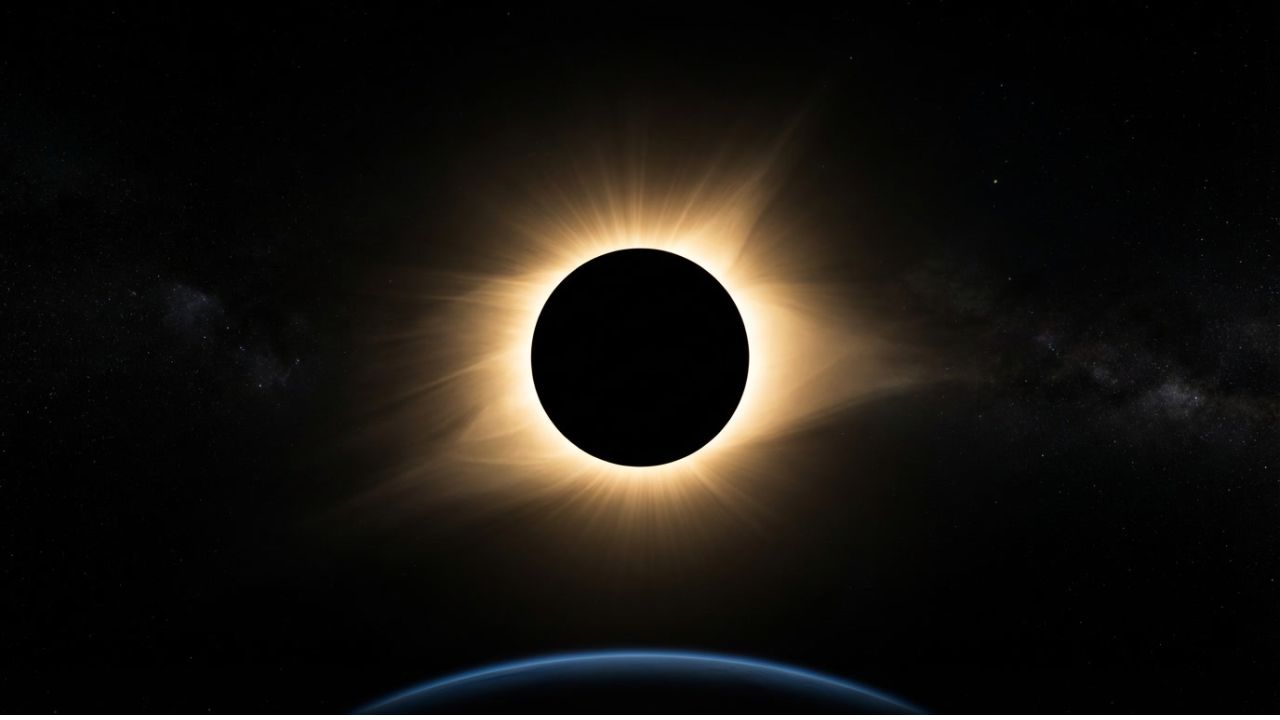
For millions of people standing in the right places, midday will briefly resemble deep twilight. Stars will appear. Temperatures will drop. The familiar outline of the Sun will vanish completely, replaced by a ghostly halo known as the solar corona.
NASA has confirmed the eclipse’s duration and geometry through long-range celestial modeling available on its eclipse resources page at https://www.nasa.gov/solar-system. The math is settled. The spectacle is waiting.
Why This Eclipse Is Different From the Rest

Total solar eclipses aren’t rare in a cosmic sense, but truly long ones are. Most last under two minutes. Some barely crack 30 seconds. This one is in a different league.
At maximum, totality will stretch beyond six minutes in certain locations. That may not sound like much—until you’ve experienced even 30 seconds of full darkness at noon. In eclipse terms, six minutes is an eternity.
The reason comes down to a near-perfect alignment of cosmic coincidences.
| Factor | What’s Happening |
|---|---|
| Moon’s position | Near perigee (closest point to Earth) |
| Earth’s position | Near aphelion (farthest from the Sun) |
| Result | Moon appears larger, Sun appears smaller |
| Effect | Longer, deeper totality |

When the Moon appears just a bit bigger and the Sun just a bit smaller, the Moon doesn’t merely cover the Sun—it dominates it. The shadow moves more slowly across Earth’s surface. Darkness lingers.
Astronomers have calculated eclipses thousands of years backward and forward. Within the entire 21st century, this one sits at the top of the list. Longer eclipses will come—but not until well into future centuries.
The Path That Changes Everything
Like all total eclipses, this one won’t be visible in full everywhere. The Moon’s shadow will carve a narrow path across the planet. Step outside it, and you’ll see a partial eclipse—a dramatic dimming, but not the real thing.
Inside the path of totality, reality shifts.
The Sun disappears completely. The sky turns a deep, metallic blue. Venus and bright stars punch through the darkness. Shadows sharpen into eerie outlines. Even the air feels different.
People who stood in the path of the 2017 U.S. total solar eclipse often describe the same reaction: shock followed by silence. According to NASA, more than 200 million people experienced that event directly or indirectly across North America. Traffic jams stretched for hours. Small towns overflowed. Airports filled with private planes.
This eclipse is expected to trigger similar behavior—possibly more intense—precisely because of its record-setting duration.
Scientists Are Counting Every Second
Those extra minutes aren’t just for awe-struck skywatchers. They matter deeply to scientists.
During totality, the Sun’s corona becomes visible to the naked eye. This wispy outer atmosphere plays a critical role in solar storms that can disrupt satellites, GPS systems, power grids, and aviation routes.
Even with modern space telescopes, the corona is difficult to study because the Sun’s brightness overwhelms instruments. A long eclipse offers a rare, natural window.
The European Space Agency has repeatedly emphasized the scientific value of eclipses for solar research, noting that extended totality improves data quality and observational depth (https://www.esa.int).
A few extra seconds can refine models. A few extra minutes can change how we understand space weather that quietly underpins modern life.
How to Actually See It—and Not Ruin It
Planning for a total solar eclipse is brutal in its simplicity. Miss the path, and you miss the moment. There are no replays.
Veteran eclipse chasers follow a few hard rules:
| Rule | Why It Matters |
|---|---|
| Be inside the path | Partial eclipses don’t deliver the full effect |
| Arrive early | Traffic jams are legendary |
| Bring certified eclipse glasses | Retinal damage is painless and permanent |
| Have backup locations | Clouds ruin everything |
| Don’t over-film | You can watch later—this moment won’t repeat |
Certified eclipse glasses must meet ISO 12312-2 standards. Sunglasses, homemade filters, and internet hacks are dangerous. TSA-level seriousness applies here: during partial phases, eye protection is mandatory. Only during full totality—when the Sun is completely covered—is it safe to look with the naked eye, and only until sunlight returns.
The official safety guidance is outlined by NASA at https://science.nasa.gov/eclipses.
The Emotional Hit No One Warns You About
Science explains eclipses cleanly. Human reactions are messier.
Psychological studies following major eclipses, including the 1999 European event, found measurable increases in reported awe and temporary shifts in how people evaluated stress and personal priorities. Something about watching daylight collapse trips ancient wiring in the brain.
Children may laugh or panic. Adults often fall silent. Some people cry without understanding why. The temperature drop is real. The quiet is real. The sense that time has warped is very real.
“You think you’re prepared,” one longtime eclipse chaser once said, “and then it happens, and you’re not.”
A Moment the News Cycle Can’t Touch
There’s a strange irony here. While headlines churn through elections, wars, markets, and scandals, one of the most unforgettable days of the century is already scheduled by gravity alone.
No debate will delay it. No vote will reroute it. No algorithm will soften it.
For a few minutes, millions of people across different countries will pause at the same sky. Social feeds will flood with shaky videos and stunned reactions. Cities will glow under an unnatural twilight. For once, attention will converge instead of scatter.
And then it will pass.
Years later, people will still ask each other the same questions. Where were you? Did it get cold? Did you hear the silence?
The date is fixed. The orbits are locked. Between now and then, life will keep scrolling. And then, in the middle of an ordinary day, the Sun will vanish—and the longest shadow of the century will remind us how small, and how lucky, we are to be watching at all.
Fact Check: Is This Really the Longest Eclipse of the 21st Century?
Yes. Astronomical calculations from NASA and international observatories confirm that the August 2, 2027 total solar eclipse will have the longest duration of totality in the 21st century, exceeding six minutes at maximum. While longer eclipses do occur across millennia, none between 2001 and 2100 will surpass it. Official eclipse data can be cross-referenced via https://www.nasa.gov and https://eclipse.gsfc.nasa.gov.
FAQs
What date is the longest total solar eclipse of the 21st century?
August 2, 2027.
How long will totality last?
Over six minutes at maximum, depending on location within the path.
Can you look at the eclipse without glasses?
Only during full totality. Eye protection is required during all partial phases.
Why does this eclipse last so long?
Because the Moon will be near its closest point to Earth while Earth is near its farthest point from the Sun.