Just before midnight, the city feels like it’s holding its breath. The sky glows with that metallic orange hue that only shows up before a real winter storm, and the air carries that faint, electric stillness that makes people glance upward without knowing why. The last trains hum across half-empty tracks, and on the platforms, strangers share the same quiet question in their eyes: Is this really happening tonight?
It is. And this time, it’s not just “a bit of snow.”
The Shift from Forecast to Reality

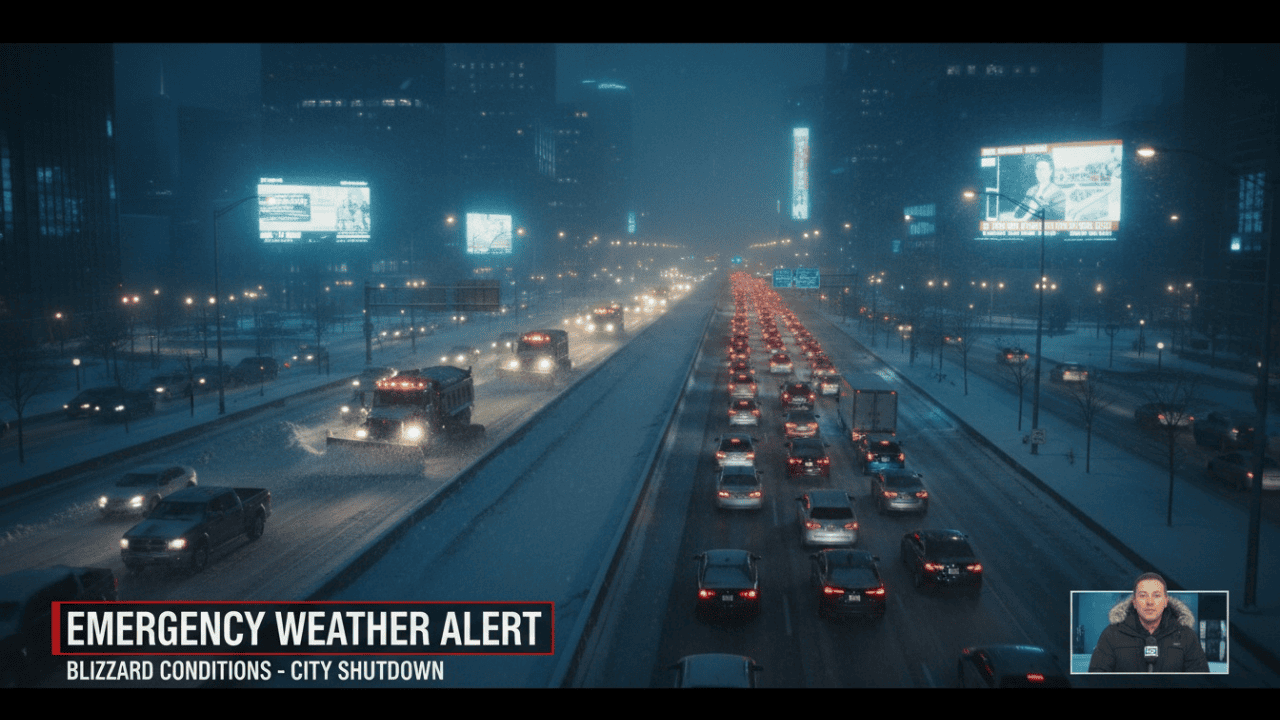
Across screens and alerts, the language has sharpened—amber, red, bold letters: Heavy snow. Major disruption. Travel risk. The last buses are crawling home late, and motorways have started thinning out, headlights reflected on slick black asphalt. You can almost sense the country tightening its scarf, preparing to hunker down.
According to the UK Met Office, a rapidly deepening low-pressure system will collide with Arctic air sweeping south, forming a textbook setup for widespread, heavy snowfall. What starts as cold rain or sleet will quickly flip to thick, settling flakes as temperatures plunge below freezing.
By dawn, much of the country could be under several inches of snow, with the highest totals expected over elevated ground and northern regions.
A Storm You Can Feel Coming
Inside motorway service stations, gritters idle under sodium lights, their orange beacons flickering against the drizzle. Drivers sip coffee and scroll through radar images painted in bands of purple and blue — the visual equivalent of a wall marching closer. In towns and cities, night-shift workers and delivery drivers exchange short, grim messages: “If I don’t make it home, I’m camping at work.”
That’s how forecasts become personal — not numbers or charts, but decisions made in real time: where to sleep, whether to drive, what to risk.
Meteorologists warn that the most dangerous window will stretch between midnight and early morning, when temperatures are lowest and most roads untreated. Snowfall rates could exceed 2–3 cm per hour in some bursts, meaning a clear road can turn impassable in twenty minutes.
What to Expect Overnight
| Time (Approx.) | Expected Conditions | Advisory |
|---|---|---|
| 11 p.m.–12 a.m. | Light rain/sleet turning to snow | Gritters active; reduce travel |
| 12 a.m.–3 a.m. | Heavy snow bands form | Rapid accumulation, poor visibility |
| 3 a.m.–6 a.m. | Peak disruption period | Avoid non-essential travel |
| 6 a.m.–9 a.m. | Continued snowfall, freezing roads | School and transport delays likely |

The Department for Transport and local councils are on alert, with contingency crews on standby for road clearance and emergency response. Air and rail operators have issued early warnings of reduced schedules, especially on routes crossing higher terrain.
Preparation: The Difference Between Inconvenience and Crisis
If you’re reading this before the storm’s peak, there’s still time to make smart moves. The rule is simple: prepare tonight, not tomorrow.
- Avoid unnecessary travel. Staying put is the best form of risk reduction.
- Charge phones and power banks. Snowstorms often lead to brief power interruptions.
- Stock simple essentials. Bread, milk, dry goods — enough for 24–48 hours of disruption.
- Check on vulnerable neighbours or relatives. Especially those who rely on medication or home care.
- If you must drive: clear all windows and lights, keep a blanket, snacks, and water in the car, and pack a small shovel.
A senior traffic controller summed it up earlier tonight: “People don’t panic because snow falls. They panic when they realise too late that it’s already changed everything.”
The Human Factor
The first instinct on nights like this is to trust habit. You look out the window, see damp roads, and think, It’s fine. Then, the temperature slips by two degrees and “fine” turns to ice.
The real difference tonight isn’t between the careful and the careless — it’s between those who adapt quickly and those who assume nothing’s changed. The snow doesn’t care about your schedule, only about physics.
Yet amid the chaos, there’s always a flicker of something else: community. Snowstorms have a strange way of softening the distance between people. The neighbour who offers a shovel. The driver who stops to push. The stranger who hands over a spare coffee on a freezing bus platform.
These are the small, unscripted moments that make winter survivable.
Looking Ahead to Morning
By sunrise, the scene will look transformed. Streets that were merely wet hours ago will be muffled in white, sound swallowed into stillness. Schools may close, buses may stall, and commuters will wake to a new routine dictated by weather, not by clocks.
Officials warn that thaw and refreeze cycles will follow later in the week, meaning black ice hazards even after the main snowfall ends. Check live updates through the Met Office Weather Warnings page or your local council’s transport feed before venturing out.
And remember: winter tyres increase control, not invincibility. Four-wheel drive helps you move forward, not stop faster.
A Night That Tests Preparedness and Patience
What’s coming isn’t apocalyptic — but it’s enough to disrupt, to slow, to expose weak points in planning and infrastructure. It’s the kind of storm that reminds cities how fragile mobility really is.
Yet it also reminds us of something else: that solidarity isn’t seasonal. The borrowed shovel, the shared salt, the hand extended to push a stuck car — these are the real headlines that don’t make it into forecasts.
When the snow melts back into dull grey slush, that’s what people remember: who reached out, who slowed down, who helped someone get home.
By this time tomorrow, we’ll be counting cancellations and delays. But for now, in the quiet before the whiteout, the city waits — breath held, lights blurred, and everyone just hoping they’ve done enough.
FAQs
When will the heaviest snow fall?
Most regions will see peak snowfall between midnight and 7 a.m., depending on elevation and local conditions.
Should I drive if the roads still look clear at night?
No. Snow often begins lightly and worsens quickly. Conditions can change dramatically within minutes.
What essentials should I have at home?
Charged phones, water, basic food, medication, extra blankets, and a working torch or lantern.
Are public transport services running?
Expect reduced or suspended services, especially on rural or elevated routes. Always check live updates before leaving home.
What’s the safest way to walk or commute tomorrow morning?
Wear sturdy shoes with grip, move slowly, and avoid shortcuts through untreated areas. Use main routes where salt and grit have been applied.