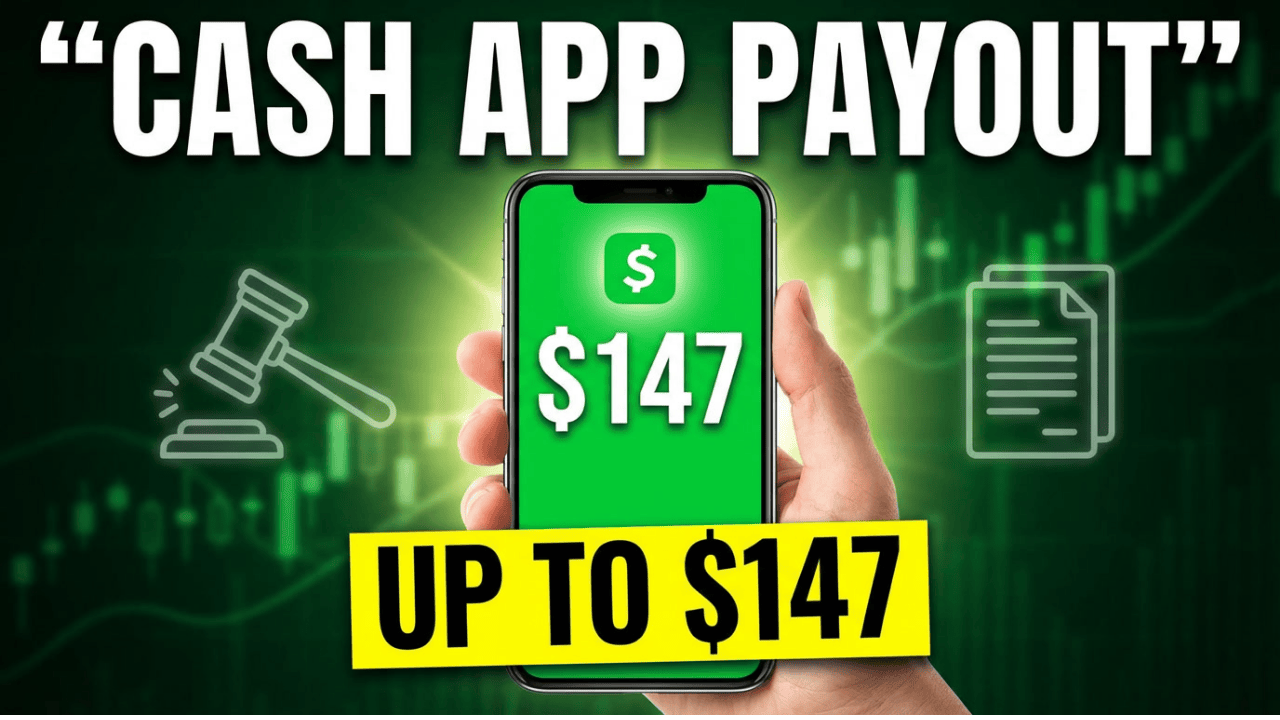
Federal courts have officially greenlit a $12.5 million class action settlement against Block, the parent company of Cash App, marking the end of a years-long battle over the company’s controversial “Invite Friends” feature. The dispute? Allegedly sending unsolicited referral text messages to users — without their consent. If you ever got one of those random “Try Cash App!” texts between November 2019 and August 2025, you might’ve been part of this lawsuit and eligible for a payout of up to $147.
What Triggered the Lawsuit
The case revolved around Cash App’s referral system — a seemingly harmless program that rewarded users $5 for every successful friend invite. But those invites came with a catch. According to the lawsuit filed in Washington State, Cash App’s system sent automated texts to potential users without verifying whether they had opted in or given prior consent.

That practice, plaintiffs argued, violated Washington’s Commercial Electronic Mail Act (CEMA) and Consumer Protection Act (CPA), two state laws that crack down on unsolicited electronic marketing. You can read more about these consumer protection standards on the Washington State Legislature site.
The plaintiffs claimed millions of such messages were blasted out, effectively turning users into unintentional spam senders.
Block Denies Wrongdoing — But Pays Up Anyway
Like many corporate settlements, this one came with a familiar caveat: no admission of guilt. In a statement, Block (formerly Square Inc.) maintained its innocence, insisting that the company complied with all federal and state laws.
“Block denies any wrongdoing and claims it has abided by all state and federal laws… Block does not admit to any wrongdoing, maintains its compliance with the law, and continues to deny the allegations against it,” the company said.
Still, rather than risk prolonged litigation and uncertain jury outcomes, Block agreed to settle. The final approval came on December 2, 2025, signed off by U.S. District Judge John Chun.
Who Qualified — and What They’re Getting
To qualify for compensation, you had to meet a few criteria:
| Eligibility Criteria | Details |
|---|---|
| Time Period | Received unsolicited Cash App referral texts between Nov 2019 – Aug 2025 |
| Location | Washington State residents only |
| Consent | Must not have agreed to receive marketing/referral messages |
| Filing Deadline | October 27, 2025 (now closed) |
| Estimated Payout | $88 to $147, depending on number of valid claims |

The settlement fund was capped at $12.5 million, covering payments, legal fees, and administrative costs. The payout per person varies based on how many of the roughly 1.97 million potential claimants filed valid claims.
If you missed the October 27 deadline — sorry, you’re out. Settlements like this follow strict timelines, and late submissions are almost never accepted.
When Payments Will Arrive
Now that the court has granted final approval, the question on everyone’s mind: When will I actually get paid?
The official settlement site (as of early 2026) hasn’t posted an exact distribution date. However, per the settlement administrator’s statement,
“Distribution of payments to Settlement Class Members will begin in accordance with the Settlement Agreement.”
That’s legalese for: “Soon.”
In most cases, payments start rolling out within two to four months after final approval — meaning Washington residents could expect payouts sometime around spring 2026, either by check, direct deposit, or digital transfer.
Why This Case Matters
This isn’t just about Cash App. It’s a shot across the bow for the entire fintech and app marketing industry. As referral programs and peer-to-peer payment apps grow, the line between convenience and consent keeps getting blurrier.
We’ve seen similar class actions before. For instance, AT&T faced a lawsuit over alleged robocalls and misleading promotions, with eligible users able to claim up to $7,500 — that claim window closed on December 18, 2025.
The Federal Communications Commission (FCC) and Federal Trade Commission (FTC) have both tightened enforcement on digital marketing consent. You can check the FCC’s guidelines on unsolicited messages for reference.
The Bigger Picture
Cash App has become one of the fastest-growing payment platforms in the U.S., handling billions in peer-to-peer transfers, stock purchases, and even Bitcoin trades. But with great scale comes scrutiny. Regulators and consumer advocates are increasingly watching how apps use customer data and communicate with potential users.
This lawsuit, modest as it may seem at $12.5 million, sends a clear message: digital referrals aren’t a free pass to spam someone’s phone.
FAQs
How much will I get from the Cash App settlement?
Eligible claimants are expected to receive between $88 and $147, depending on total valid claims.
When will I receive payment?
Most payouts are expected by spring 2026, though the exact timeline hasn’t been confirmed.
Who was eligible for compensation?
Anyone in Washington State who received unsolicited Cash App referral texts between Nov 2019 and Aug 2025 and didn’t consent to marketing messages.
Did Block admit any wrongdoing?
No. The company continues to deny all allegations and settled only to avoid ongoing litigation.
Can I still submit a claim?
No, the deadline to file was October 27, 2025.