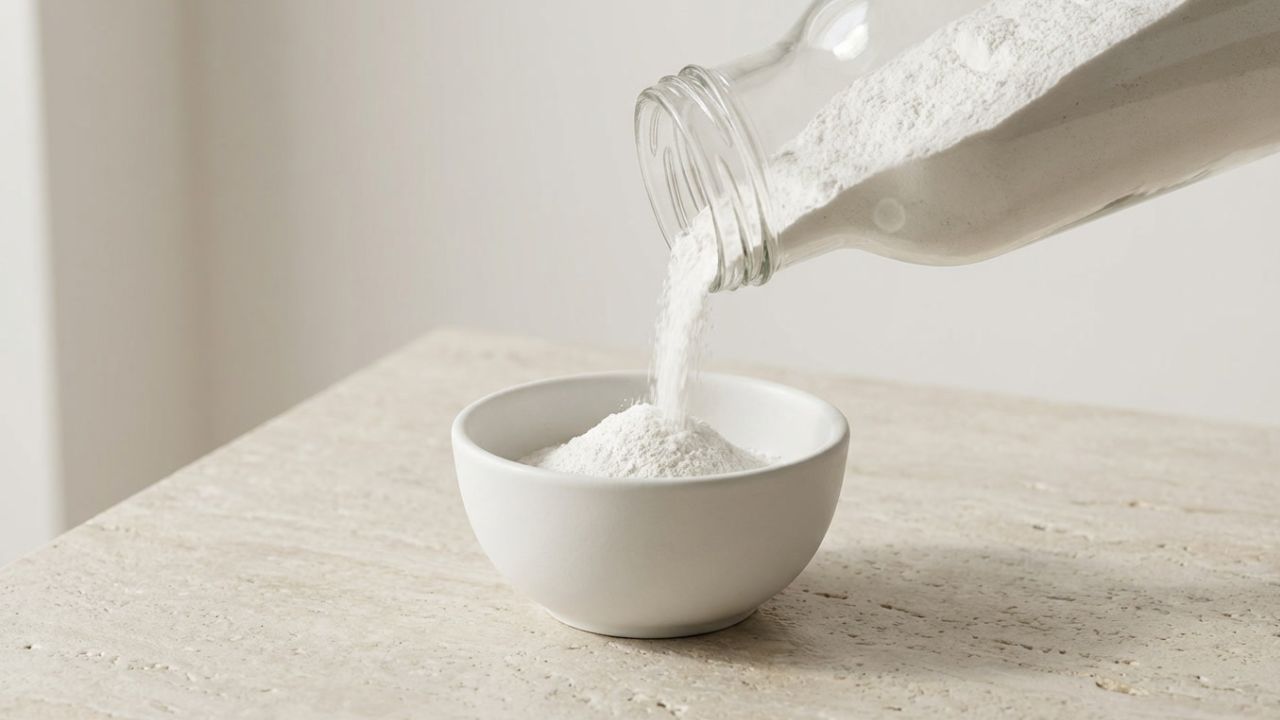
On a damp Tuesday evening in a cramped city apartment, Carla wasn’t chasing a viral cleaning hack. She was just exhausted. Exhausted by the sour smell leaking from beneath her sink. Exhausted by bottles that promised “deep clean power” and delivered chemical fumes and disappointment. So she grabbed what was already there: a battered orange box of baking soda and a brown pharmacy bottle of hydrogen peroxide.
When she mixed them, the paste fizzed quietly, like it was thinking. Ten minutes later, the black mold ring that had been laughing at her for weeks wiped away with almost no resistance. Carla froze, stared at the sink, then laughed out loud. It felt like discovering a shortcut no one bothered to tell her about.
She hadn’t discovered anything new. She’d rediscovered something old.
Why This Simple Combo Actually Works
Baking soda and hydrogen peroxide look unimpressive sitting on a shelf. No neon labels. No warnings in bold red letters. But chemically, they do serious work.
Baking soda—sodium bicarbonate—is mildly abrasive and alkaline. That means it scrubs without gouging and neutralizes acidic odors instead of masking them. Hydrogen peroxide, typically sold in a 3% solution for household use, is an oxidizer. It breaks down into water and oxygen, releasing microscopic bubbles that lift organic stains and attack bacteria, mold, and mildew.

When you combine them, you get a paste that sticks instead of dripping, fizzes where grime hides, and cleans without turning your bathroom into a gas chamber. It’s the same chemistry that underpins many commercial cleaners—minus the perfumes and aggressive additives.
Cleaning chemists describe it bluntly: this is low-tech chemistry doing high-impact work.
The U.S. Environmental Protection Agency has long noted that hydrogen peroxide-based cleaners break down into environmentally benign byproducts, unlike chlorine-based alternatives (https://www.epa.gov/saferchoice). That matters if you care about indoor air quality—or your lungs.
Where People First Notice the Difference

For most people, grout is the gateway.
Mix roughly two parts baking soda with one part hydrogen peroxide until you get a thick, spreadable paste. Press it into dirty grout lines. Wait five to ten minutes. Scrub lightly and rinse. The change is immediate enough to feel suspicious.
Kitchens come next. Yellowed cutting boards, stained sinks, greasy oven doors. Baking sheets that look permanently ruined often respond to repeated treatments. They won’t look brand-new, but they’ll look respectable again. And sometimes, that’s victory.
Laundry stains are another quiet success story. Sweat marks, blood, food spills, mattress halos—anything organic stands a fighting chance. Dab, let it bubble, rinse, then wash. It doesn’t save every fabric, but when it works, it saves real money.
Dentists even acknowledge—carefully—that diluted versions can lift surface stains on teeth. The American Dental Association warns against overuse but confirms that mild abrasives and peroxide are common ingredients in whitening products (https://www.ada.org). The keyword is moderation.
What It’s Good At—and What It Isn’t
This mixture works best on organic grime. Mold, mildew, food residue, body oils, odors. It struggles with mineral buildup like hard water scale, where vinegar or citric acid perform better.
Here’s a practical breakdown:
| Surface or Problem | Works Well? | Notes |
|---|---|---|
| Tile grout (sealed) | Yes | Use a soft brush |
| Mold and mildew | Yes | Needs contact time |
| Laundry stains | Often | Best on organic stains |
| Marble or granite | No | Can dull the surface |
| Unfinished wood | Risky | May discolor |
| Heavy drain clogs | No | Not a drain opener |
This is where social media gets people into trouble. The combo isn’t universal.
Natural stone can lose its polish. Dark fabrics can lighten unpredictably. Antique metals can react badly. That’s why professionals repeat the same boring advice: test a hidden spot first.
And never mix this with vinegar or bleach. Hydrogen peroxide plus vinegar can create peracetic acid, which irritates lungs and eyes. Any oxidizer plus bleach risks releasing toxic gases. The CDC has documented these reactions clearly in household chemical safety guidelines (https://www.cdc.gov).
This isn’t paranoia. It’s chemistry.
How to Use It Without Wasting Its Power
The biggest mistake people make is treating this like a spray-and-wipe cleaner. It’s not. It needs time.
Experts generally recommend:
- Mix only what you’ll use immediately
- Apply and wait 5–10 minutes
- Scrub gently, then rinse thoroughly
The fizz you see is oxygen being released. That’s the work happening. Once the bubbling stops, most of the reaction is finished.
Don’t store mixed batches. Once the fizz fades, the cleaning power fades with it.
Wear gloves if you’re scrubbing a lot. Alkaline paste plus friction dries out skin faster than you expect.
The Quiet Shift It Creates at Home
After the first success, something changes. People stop buying five different bottles for five different problems. The cleaning cabinet shrinks. The air smells neutral instead of aggressively floral.
There’s also a psychological shift. Mixing the paste feels intentional. You’re not blindly spraying and hoping. You’re watching cause and effect. You learn what works in your house, with your water, on your messes.
That sense of control matters. Especially in homes where surfaces seem to age faster than you can keep up. Where grout darkens no matter how often you clean. Where fabrics stain the moment you relax.
This simple duo doesn’t promise perfection. It promises usefulness. And that’s why it keeps resurfacing, generation after generation.
Sometimes the smartest solutions aren’t new. They’re just waiting quietly under the sink.
Fact Check: Is This Safe and Legit?
Yes—with limits. Baking soda and 3% hydrogen peroxide are widely recognized as safe household cleaners when used correctly. Both ingredients are commonly referenced in environmental and health guidance from the EPA (https://www.epa.gov) and CDC (https://www.cdc.gov). Problems arise only when they’re misused, overused, or mixed with incompatible chemicals like bleach or vinegar.
FAQs
Can baking soda and hydrogen peroxide be used to whiten teeth?
Yes, cautiously. Use only 3% hydrogen peroxide, mix a small amount with baking soda into a thin paste, and limit use to once or twice a week. Brush gently and stop if sensitivity appears.
Is this mixture safe for grout?
Mostly yes, especially for sealed ceramic tile grout. Very old or unsealed grout can be fragile, so test first and use a soft brush.
Does it work as a drain cleaner?
Only for light odors or mild organic buildup. It’s not effective for serious clogs and shouldn’t replace proper drain maintenance.
Can it replace all commercial cleaners?
No. It works best on organic messes. Mineral scale, rust, and grease-heavy industrial grime may require other solutions.
Is it safe for daily use?
Occasional use is fine. Daily aggressive scrubbing can damage surfaces and dry out skin over time.