
It usually happens in a blink. Blue lights flashing on the shoulder. A disabled car with its hazards on. A tow truck driver crouched inches from speeding traffic. Most drivers notice, hesitate for half a second, then keep going exactly as they were.
Florida law enforcement is done tolerating that moment of hesitation.

Across the state, officers are cracking down hard on violations of Florida’s “Move Over” law, and they’re making it clear this is no longer a warning-friendly offense. Tickets are being written on the spot, points are being added to licenses, and drivers are learning—often too late—that this law applies to far more situations than they ever realized.
“No More Warnings, No More Excuses”
The latest enforcement push made headlines this month after the Florida Highway Patrol and the Brevard County Sheriff’s Office issued 15 Move Over citations in a single day along Interstate 95.
Sheriff Wayne Ivey didn’t mince words.

“No more warnings, no more excuses,” Ivey said in a video posted to Facebook. “Not another lost life, not another injured person out on I-95 because of irresponsible driving.”
This isn’t a symbolic crackdown. Officers say Move Over violations are one of the leading contributors to roadside deaths involving law enforcement, tow truck drivers, utility workers, and stranded motorists.
According to the Florida Department of Highway Safety and Motor Vehicles, dozens of roadside workers and drivers are struck every year while stopped on highways and major roads, often because passing drivers failed to slow down or change lanes (https://www.flhsmv.gov).
What the Move Over Law Actually Requires

Many drivers think the Move Over law only applies to police cars with flashing lights. In Florida, that assumption can cost you money—and points.
Florida’s law applies to any stopped vehicle displaying emergency lights, hazard lights, or road flares. That includes:
- Police vehicles
- Fire trucks and ambulances
- Tow trucks
- Utility service vehicles
- Disabled or stalled vehicles with hazard lights
When approaching a stopped vehicle, drivers must do one of two things:
| Situation | What the Law Requires |
|---|---|
| You can safely change lanes | Move over one lane away from the stopped vehicle |
| You cannot change lanes | Slow down significantly |
And “slow down” has a specific legal meaning in Florida.
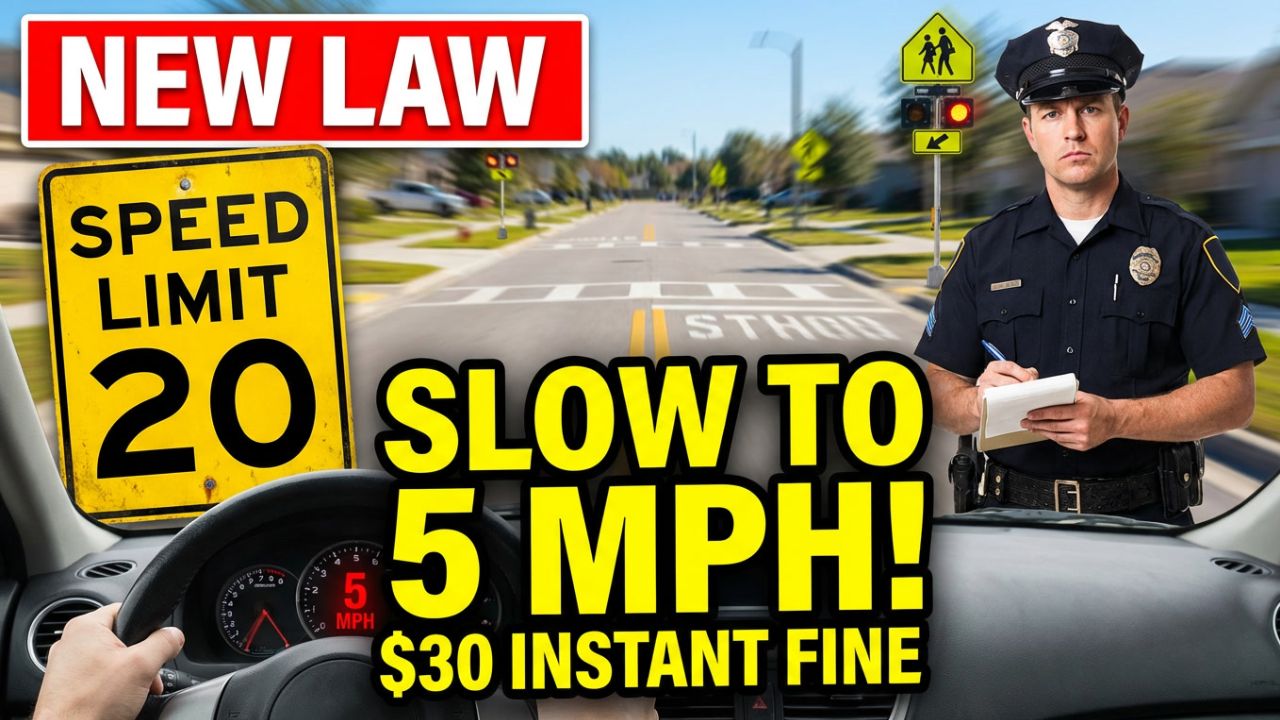
If the posted speed limit is over 20 mph, you must reduce your speed by at least 20 mph.
If the speed limit is 20 mph or less, you must slow to 5 mph while passing.
Failing to do either is a violation—even if traffic is light, even if the stop looks minor, even if you’re “just passing quickly.”
The statute is outlined under Florida Statute 316.126, available through the state legislature and summarized by FLHSMV (https://www.leg.state.fl.us).
The Cost of Ignoring It
The base fine for a Move Over violation in Florida starts at $30, but that’s just the beginning.
Each offense also adds three points to a driver’s license. Those points can:
- Increase auto insurance premiums
- Push drivers closer to license suspension
- Trigger additional penalties for repeat offenses
In some counties, local surcharges can raise the total cost significantly beyond the base fine. And during enforcement operations like the current I-95 crackdown, officers are issuing citations without discretion.
Law enforcement agencies say the message is simple: if you see flashing lights or a stopped vehicle on the shoulder, your responsibility is immediate.
Why Florida’s Law Is Stricter Than Many States
Some states limit their Move Over laws strictly to emergency vehicles. Florida does not.
The Sunshine State expanded its law after years of data showed that tow truck operators and stranded drivers were being struck at alarming rates. A stopped car with hazard lights is just as vulnerable as a patrol cruiser during a traffic stop.
The only major exception in Florida applies to emergency vehicles actively responding to another emergency while using sirens or flashing lights. In that case, the moving emergency vehicle has the right of way.
For everyone else, the rule stands.
The Florida Highway Patrol has repeatedly emphasized that “I didn’t know” is not a defense. The law assumes drivers are responsible for knowing and following it.
Why Enforcement Is Escalating Now
Traffic fatalities in Florida have remained stubbornly high despite safer vehicle technology. Law enforcement agencies say aggressive driving, distraction, and impatience are erasing many of those gains.
The I-95 crackdown isn’t just about Move Over violations. Officers are also targeting:
- Speeding and “super speeders”
- Tailgating
- Seatbelt violations
- Careless and reckless driving
But Move Over enforcement has taken center stage because of its direct connection to roadside deaths.
Tow truck drivers, in particular, have pushed for stricter enforcement. Nationally, the towing profession is one of the deadliest, according to data from the Bureau of Labor Statistics (https://www.bls.gov).
Common Misunderstandings That Get Drivers Ticketed
Officers say most violators aren’t intentionally reckless—they’re misinformed.
Some of the most common excuses heard during traffic stops:
- “I thought it only applied to police cars.”
- “Traffic was heavy, so I couldn’t move.”
- “I slowed down a little—that should count.”
- “The car was already pulled over; I didn’t think it mattered.”
None of those hold up legally.
If you can’t move over, you must slow down by the required amount. Slowing “a little” is not enough. And yes, it absolutely matters even if the vehicle is already stopped.
The Human Cost Behind the Law
Behind every enforcement push is a long list of names that never make the news.
Roadside workers describe the sound of vehicles rushing past inches from their backs. Law enforcement officers describe traffic stops as some of the most dangerous moments of their careers. Families describe losses that never should have happened.
Sheriff Ivey’s warning wasn’t rhetorical. It was rooted in years of fatal crash reports and hospital visits.
For police, this isn’t about revenue. It’s about survival.
What Drivers Should Do—Every Time
The safest approach is consistency. Don’t debate whether a situation qualifies. Treat every stopped vehicle as a Move Over situation.
If you see:
- Flashing lights
- Hazard lights
- A vehicle stopped on the shoulder
Do this immediately:
- Check mirrors and signals
- Move over one lane if possible
- If not, slow down by the required amount
Build the habit, and you won’t have to think about it.
Florida’s Move Over law requirements, penalties, and enforcement details are based on Florida Statute 316.126, statements from the Brevard County Sheriff’s Office, and guidance from the Florida Department of Highway Safety and Motor Vehicles. The January enforcement figures and Sheriff Wayne Ivey’s comments were publicly shared via law enforcement communications and social media. Additional context on roadside safety risks comes from FLHSMV and Bureau of Labor Statistics data.
FAQs
Does Florida’s Move Over law apply to regular cars?
Yes. Any stopped motor vehicle with hazard lights or emergency signals is covered.
What if I can’t safely change lanes?
You must slow down—20 mph below the posted limit, or to 5 mph if the limit is 20 mph or less.
How many points does a Move Over violation add?
Three points on your driver’s license.
Is the fine really only $30?
That’s the base fine. County fees and surcharges can raise the total cost.
Are warnings still given?
Law enforcement has made it clear that warnings are no longer the norm during active enforcement campaigns.