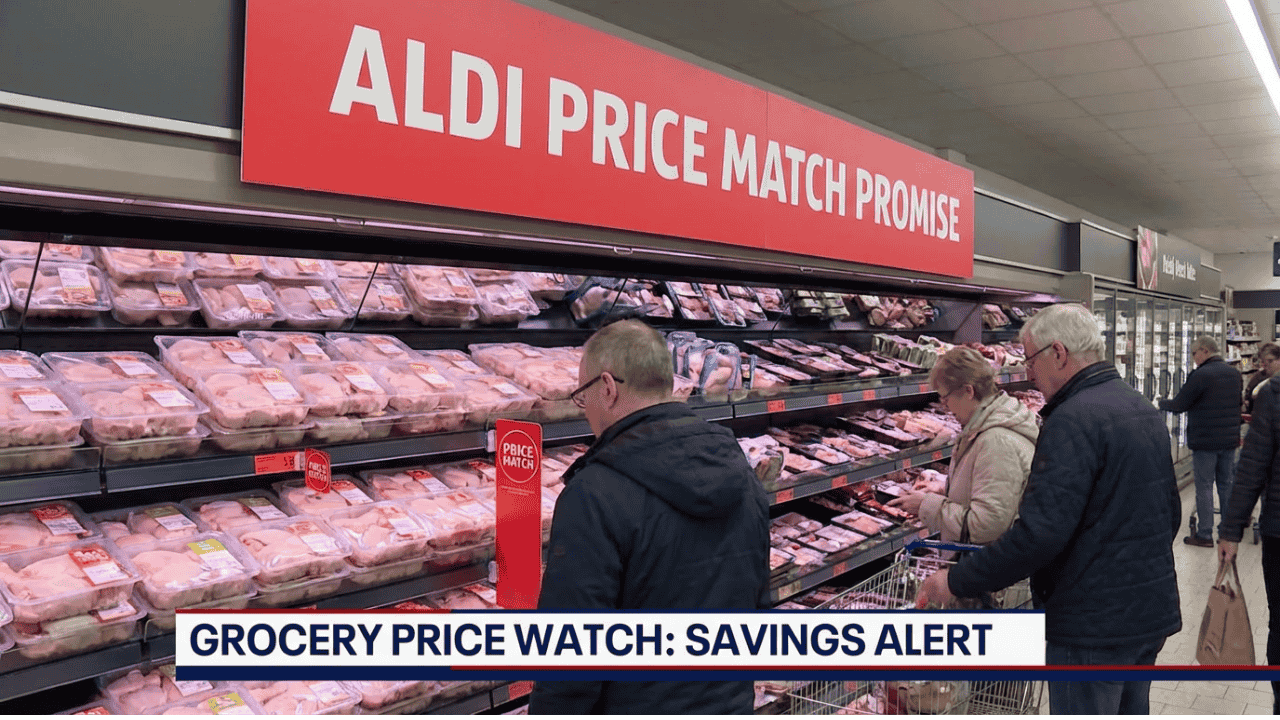
Sainsbury’s is still topping the charts — though not for the reasons shoppers might like. According to the latest Manchester Family / MEN weekly supermarket price comparison, the grocer remains the most expensive for basic grocery essentials, holding that spot since September 2025.
And this week, there’s another shake-up further down the list. Tesco has now overtaken Morrisons as the second most expensive, thanks to a small but significant price increase — one that came down to tea bags.
Tesco’s 5% Price Jump

Tesco, which began 2026 pledging to keep prices “as low as possible,” has raised the price of its Stockwell 80-pack tea bags from 88p to 92p — a 5% increase in just one week. That single change nudged its eight-item essentials basket up to £13.50, narrowly behind Sainsbury’s at £13.53.
By contrast, Morrisons actually reduced the price of its Savers tea bags to 88p, bringing its total down to £13.40 (from £13.44 last week).
| Supermarket | Total Basket (8 essentials) | Change vs. last week |
|---|---|---|
| Lidl | £13.11 | — |
| Aldi | £13.13 | — |
| Asda | £13.15 | — |
| Morrisons | £13.40 | ↓ from £13.44 |
| Tesco | £13.50 | ↑ from £13.42 |
| Sainsbury’s | £13.53 | — |
The basket includes everyday staples: bread, butter, milk, baked beans, tea, coffee, chicken, and mince — with the comparison tracking each supermarket’s cheapest equivalent since March 2022.
Lidl Still the Cheapest — for the Sixth Week in a Row
Lidl continues to dominate as the cheapest supermarket, coming in at £13.11, just pennies ahead of Aldi (£13.13) and Asda (£13.15).
The margin between the top three has stayed remarkably tight for weeks — a reflection of ongoing “price match” wars, particularly between Lidl, Aldi, and Asda’s Just Essentials range.
Lidl has now held the top spot for six consecutive weeks, reinforcing its no-frills, low-margin strategy that continues to attract value-seeking shoppers.
How the Supermarkets Responded
Unsurprisingly, not all retailers agree with the comparison’s methodology.
Aldi — which prides itself on being named Which? Cheapest Supermarket of the Year for five years running — argued that the study doesn’t reflect quality or quantity differences:
“Our customers know they can always count on us for great value across the board, without needing to join a club or show a loyalty card,” an Aldi spokesperson said. “Our products — including Diplomat Red Label tea and our coffee — are higher quality and, in some cases, larger than the equivalents used in this study.”
Asda also pushed back, saying that the limited product list “does not represent the fuller picture” or include its ongoing Nectar-like Just Essentials promotions.
And Sainsbury’s, which continues to face criticism over its high position, defended its pricing strategy:
“This review of a limited number of products does not reflect the fantastic value our customers will find at Sainsbury’s,” a spokesperson said. “We’re committed to offering the best possible value across a wide variety of products — through our Stamford Street range, Low Everyday Prices, Aldi Price Match, and Nectar Prices.”
Tesco’s Price Promise — and the Return of Its Blue Stripes
Interestingly, Tesco’s price bump came just as the supermarket revived its iconic blue-and-white “Value” stripes, this time as part of its Everyday Low Prices campaign.
The scheme now covers more than 3,000 branded products — including household staples like Heinz, Weetabix, Fairy Liquid, and PG Tips — meant to signal consistent affordability.
But as this week’s comparison shows, even small increases on own-brand essentials can shift a retailer’s position quickly.
What This Means for Shoppers
For most families, the gap between the cheapest and most expensive baskets — roughly 40p this week — might not sound dramatic. But over a year, that difference adds up, especially for households buying the same essentials week after week.
Lidl and Aldi continue to dominate the low-cost bracket, while Asda’s Just Essentials range keeps it competitive. Tesco and Sainsbury’s, despite brand loyalty programs and discount schemes, remain at the pricier end of the scale.
And with inflation easing but not disappearing, the smallest price movements — like a 4p increase in a box of tea — are still enough to stir the supermarket rankings.
FAQs
Which supermarket is currently the cheapest?
Lidl, at £13.11 for the same eight-item basket, followed closely by Aldi and Asda.
Which is the most expensive?
Sainsbury’s remains the most expensive, with a total of £13.53.
Why did Tesco’s price rise?
Its Stockwell tea bags increased from 88p to 92p — a 5% jump that pushed its basket cost to £13.50.
Are these prices for branded products?
No. The comparison uses each supermarket’s cheapest available range, such as Aldi’s Everyday Essentials or Sainsbury’s Stamford Street.
How often are these comparisons done?
Weekly — tracking price shifts since March 2022.