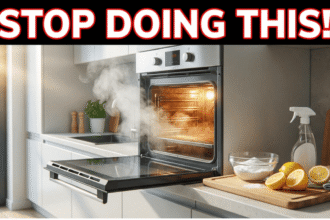

You open the oven door and it hits you — that sour, burnt smell that’s half nostalgia, half shame. Baked-on lasagna, fossilized pizza cheese, greasy streaks catching the light like a crime scene. You sigh, thinking about the chemical fumes, the scouring pads, the sore shoulders. But then you remember that viral hack: steam-cleaning. No scrubbing, no toxins, no drama. Just water, heat, and patience. It sounds too good to be real. Until you try it.
The Hidden Power Button Most People Ignore
If you own a modern oven, the hero is already there — tucked quietly next to the intimidating Self-Clean setting. It’s smaller, quieter, and friendlier: Steam Clean.

Here’s the concept. You add a shallow pool of water inside, the oven heats it to a gentle boil, and the vapor loosens everything that dry heat once turned to concrete. That sticky mix of sugar, fat, and crumbs surrenders its grip. No 900°F inferno. No locked doors. Just quiet humidity doing what elbow grease usually does.
Picture this: a lazy Sunday after a chaotic week of dinners. The oven floor looks like it could tell stories. You pour in a cup of water, close the door, press Steam Clean, and walk away. Forty minutes later, you open it to a warm cloud and a soft sludge that wipes away with a single towel. That’s the moment you text a picture to your group chat with a sheepish, “Okay this actually works.”
Why Steam Works (and Scrubbing Doesn’t)
When you bake or roast, your oven works like a kiln. It bakes moisture out of spills until they harden into carbonized crusts that bond to metal. Steam flips the chemistry. It re-hydrates those molecules, breaks down sugar and fat chains, and literally unglues grime from the surface.

“Steam cleaning is like soaking your whole oven in one go,” says appliance technician Mark Llewellyn of Appliance Pros Canada. “The people who think it doesn’t work either don’t use enough water or wait too long before wiping it down. The trick is timing and moisture.”
The science checks out, too. Studies from the U.S. Department of Energy show that steam cleaning uses a fraction of the energy of self-clean cycles, which can run for three hours and reach 900°F. Steam cycles rarely top 250°F and consume up to 80% less electricity.
| Cleaning Method | Avg. Temp | Duration | Energy Use | Pros | Cons |
|---|---|---|---|---|---|
| Steam Clean | 200–250°F | 30–60 mins | Very Low | Gentle, quick, no fumes | May need manual wipe |
| Self-Clean | 800–900°F | 2–3 hrs | Very High | Deep cleanse, kills bacteria | Smells, heavy power use |
| Manual Scrub | N/A | 1–2 hrs | None | Immediate control | Labor-intensive, harsh chemicals |
The Step-by-Step
Here’s how to do it right — the real version, not the TikTok “pour and pray” shortcut:
- Clear the oven. Remove racks if your manual suggests it (some discolor under heat).
- Pre-scrape the worst offenders. Use a plastic spatula or old gift card to loosen thick chunks.
- Add water. About one cup on the floor of the oven or in the reservoir if your model has one. Add a tablespoon of white vinegar for grease.
- Shut the door and start the Steam Clean cycle. Most run 20–60 minutes. Resist the urge to peek. Opening the door mid-cycle vents the steam and kills the effect.
- Wait 5–10 minutes after the beep. That lingering humidity keeps working.
- Wipe while warm. Use a soft cloth or sponge while the surface is still slightly hot — the grime lifts effortlessly.

Done. No scorched hands, no gas-mask-level fumes, no guilt.
The “Lazy Genius” Upgrade
The real beauty of steam cleaning is how it makes maintenance feel possible. You don’t have to tackle the oven twice a year in a three-hour battle. Run a steam cycle once a month or after any splashy bake — roasted chicken, bubbling lasagna, caramelized fruit. Suddenly, your oven becomes one less thing silently judging you.
That small habit saves energy, extends your oven’s lifespan, and keeps your food tasting right. (Ever noticed that faint burnt-popcorn flavor sneaking into your next batch of cookies? That’s leftover residue smoking at high heat.)
When It Doesn’t Work
Let’s be honest: if your oven looks like a barbecue pit, one round won’t fix it. Steam loosens, it doesn’t erase. If years of carbon are baked into corners, you may need two or three cycles or a quick scrub with baking soda paste afterward. The goal is to reset your oven’s baseline so future cleans are easy.
“Steam won’t do miracles,” says Llewellyn. “It’s a maintenance tool. Think of it as flossing, not a root canal.”
A Clean Oven Feels Different
The next time you preheat and don’t smell smoke or see haze through the glass, you’ll get it. That subtle calm of order, the small victory of adulting done right. We talk a lot about big life upgrades — new jobs, gym routines, meal plans — but sometimes the quietest wins happen between 250°F and a cup of hot water.
The steam-clean trick isn’t glamorous, but it’s the kind of simple, repeatable fix that shifts a household’s energy. It turns chaos into calm, dread into habit. One button, one cup of water, and one less excuse to ignore the mess.
FAQs
Does steam cleaning work on all ovens?
Most modern electric and convection ovens include it. For older models, placing an oven-safe pan with boiling water inside for 30 minutes achieves a similar effect.
Will vinegar damage my oven?
No, diluted vinegar is safe. It helps dissolve greasy residues and deodorizes the interior.
Can I steam clean with racks inside?
Yes, but racks may lose shine or darken slightly over time. For best results, clean them separately.
Is it safe for gas ovens?
Yes, as long as you follow your manufacturer’s manual and avoid overfilling the bottom with water.
How often should I use steam clean?
Once a month or after any major cooking spill keeps buildup manageable.